
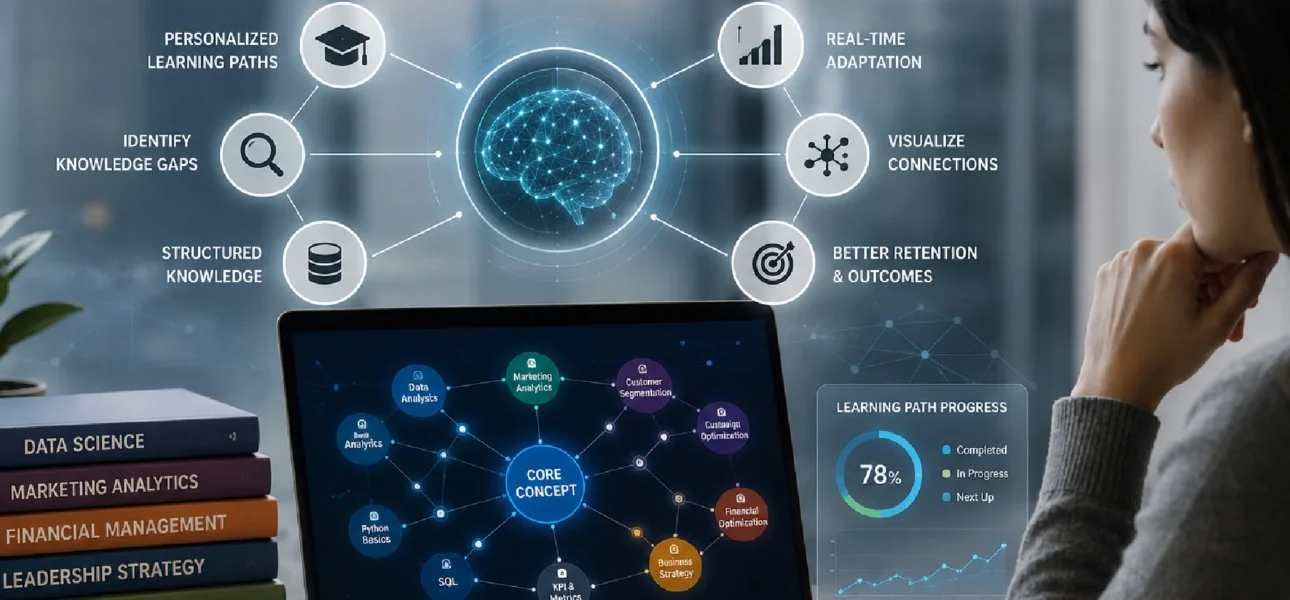
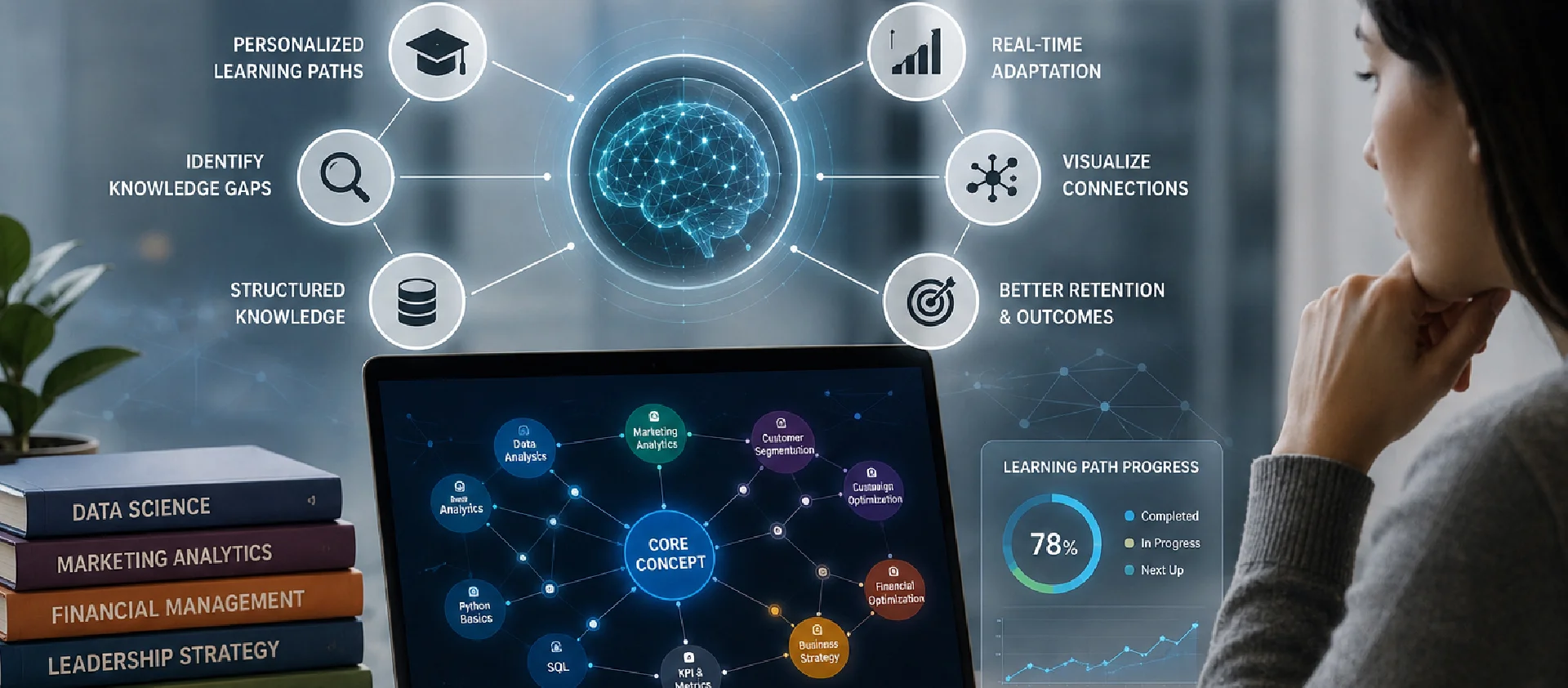

For decades, learning was linear. You finished Chapter 1, then Chapter 2. However, the human brain works as a network, not a list. Knowledge mapping externalizes this network, making “hidden” relationships visible.
Lost in information overload? A strong knowledge map helps you stay on track. Picture it like a compass inside your head, steering clear of confusion. Instead of wandering aimlessly, you move with purpose. This method clears mental clutter. It connects ideas naturally. Think of how trails link distant spots in a forest – same idea here. With structure, details make sense. Learning becomes smoother, less tangled. You recall faster because links already exist. Clarity grows step by step. Progress feels steady when paths are visible.
1. The “Information Silo” Problem in Traditional LMS
Some students grasp ideas just fine – until they need to link them together. Islands of knowledge pop up when courses ignore connections between topics. A map of what we know links pieces together, showing how each part relies on another.
Picture this – their system tags ideas automatically, so you see how something from Data Science connects straight into Marketing Analytics. One idea flows to the next, no walls between them. Suddenly, it clicks, just like that. Not through force, but smart links built right in. A thought from one area lights up another without delay. This is how gaps vanish – quietly, efficiently, behind the scenes.
2. Scaling True Personalized Learning
Most platforms claim to offer personalized learning, but they usually just adjust the speed of content delivery. They don’t change the path.
- The Solution: Knowledge maps allow for “Pathway Fluidity.”
- The AI Edge: Using AI for personalized learning, platforms like AI Faculty detect a student’s specific logic gaps and dynamically redraw the map to bypass mastered content and focus on “red-zone” nodes.
3. Cognitive Overload and the “Wall of Text”
Halfway through fifty pages, the mind hits a wall. After that point, new details just slip away. Thoughts grow heavy when too much flows in at once. Focus fades before you even notice. What enters the eyes no longer reaches memory. Information piles up without sticking. The head feels full long before the page count ends. Clarity breaks down after sustained effort. Mental space runs out like an overfilled drawer. By the finish line, nothing stays.
Out here, structure matters. Maps of knowledge cut through clutter because they sort tangled details into clear layouts across space.
Picture this. Seeing how things connect hits the mind way quicker than reading words – like sixty thousand times faster. That speed boosts how much a learner can take in on the spot.
4. The Strategy-Execution Gap in Corporate Training
Most firms pour huge sums into programs workers ignore. That gap exists since skills taught rarely connect to real job results.
Here is how it works: skills are linked straight to performance measures.
Spending time on the platform means real results because skills connect directly to company targets. When training lines up with what the business needs, progress shows clearly in daily work. Goals guide learning paths so effort turns into visible change across teams. This is how knowledge mapping reduces “Time-to-Proficiency.” If you can save a company 2 weeks of onboarding time per employee, that is a multi-million dollar value proposition.
Want to see your own content mapped? Boom a Demo in AI Faculty’s Knowledge Mapping Feature and see the results for yourself.
5. Identifying “Hidden” Logic Gaps
A student might pass an LMS quiz with 90%, but the 10% they missed might be the foundational “anchor” for future lessons.
- The Solution: Mapping allows for “Heatmap Diagnostics.”
- The Result: Instead of a simple score, educators get a visual heatmap of the learner’s brain. They can see exactly which conceptual link is broken before the learner moves on to more complex material.
6. Managing Rapidly Decaying Content
In 2026, information becomes obsolete in months. In a linear LMS, updating one fact might require re-recording hours of video.
- The Solution: Modular Knowledge Nodes.
- The Advantage: On a mapped AI learning platform, you update a single node. Because the map is interconnected, every related learning path is updated simultaneously, ensuring content is always “fresh.”
7. Lack of Searchable Context (The Search Crisis)
Finding a specific piece of information in a massive learning management system is like finding a needle in a haystack.
- The Solution: Semantic Navigation.
- How it Works: With AI Faculty, learners don’t just search for keywords; they navigate through “Concept Context.” They see not just the result, but the prerequisites and the “next steps” associated with that topic.
8. High Attrition in Self-Paced Courses
Most firms pour huge sums into programs workers ignore. That gap exists since skills taught rarely connect to real job results.
Here is how it works: skills are linked straight to performance measures.
Spending time on the platform means real results because skills connect directly to company targets. When training lines up with what the business needs, progress shows clearly in daily work. Goals guide learning paths so effort turns into visible change across teams.
9. The “Black Box” of AI Recommendations
Most artificial intelligence systems suggest material with no clear reason behind it. Because of that, people start doubting whether they can rely on what’s shown.
The Solution: Explainable AI (XAI).
Because their AI shows how one idea links to another, it clarifies why a certain topic comes next. Starting with transparency, learners begin to feel more control. Seeing the reasoning behind each step helps confidence grow slowly. The path forward makes sense when connections are visible. Trust forms not through claims but through clear design.
10. Poor Long-Term Retention (The Forgetting Curve)
One way of studying just piles on facts that vanish fast. Learning straight down a line tends to feel like stuffing your head with things you lose soon after
Here’s how it works:
- Mix practice by linking concepts together.
- Knowledge maps show how ideas connect.
- Helping learners grasp meaning more fully
Right when someone is about to forget something, the system suggests reviewing that piece again – timing it just right. This repetition, matched to mental rhythms, strengthens recall over time. Each nudge comes quietly, fitting naturally into the flow of study.